Tuesday, October 10, 2017

Haunted Medina County - Lisa Rienerth

Time to resurrect Lisa's excellent blog!

But don't forget, this Saturday at the Brunswick Library, the Genealogy Slam!


Since Halloween is here, it is time for some ghost stories. Let's visit a few places in Medina County to help you get into the spirit (pun intended) of this spooky holiday!

MEDINA 


The Corkscrew Saloon – 811 W. Liberty Street, Medina


This Victorian Home has had many names in the past 130 years. It is said that Nelson Burnham built the house for his daughter, Nell, in the late 1800's and was known as the Burnham Home. It is said to be the 2nd oldest building standing in Medina. The interior of the house was arranged at the direction of Mrs. Burnham herself who desired the structure to be one of convenience. Through the years it has had many names…The Homestead Restaurant, Great Expectations, Penny’s Poorhouse and it is now The Corkscrew Saloon. The spirits seemed to start making themselves known when it was Penny’s Poorhouse. Penny Codarini, the former owner, was always happy to talk about the haunting and felt that they must be children, due to the prankish types of incidents. Her and her husband experienced moved furniture, missing items, someone walking up and down the stairs and she even heard her name being called. Many patrons said they saw ghostly apparitions and one of the waitresses even saw a white cat that mysteriously disappeared when she went to get it out from under one of the tables. The new owners are not as open to talking about the hauntings, but some of the wait staff have a few tales to tell. The last time I was there I heard this story…They were setting up one of the upper rooms for a private dinner party. The table was all set with napkins and silverware and when the server came back up to make sure nothing was forgotten the silverware was all a mess and salt was spread all over the table….Like Penny said…Childish Pranks!


Medina Library – 210 S. Broadway, Medina


The Franklin Sylvester Room


The Medina Library has a century long history of serving the community. The original library was built on its current site with funds donated by Franklin Sylvester and opened in 1907. Unfortunately, Mr. Sylvester passed away in May of 1907, without getting to see his library completed. In his will, he left the library an additional $4,000 and stated that the library was always to remain named the Franklin Sylvester Library. However, the library is now known as the Medina Library…not the Franklin Sylvester Library. This may be upsetting to Franklin. However, even though his name is no longer used as the name of the library, it is the name of the library’s local history room. You can see Mr. Sylvester’s portrait as you enter the room. Mr. Sylvester’s presence has been felt by a few people in this room and some have seen a figure of a tall, dark man.


 The 1907 Room 

This room is the original part of the library. When a local ghost hunter group did a program here at the library a group of people went into the 1907 room. They were able to get responses to questions on a lighted meter. It seems that a young man may be in this room. While watching the responses on the meter a loud bang was heard as if someone had kicked the wood paneling. Others have felt a “presence” in this room…come and see if you do.


Robby’s Voice Recovery Center F.K.A. The Medina Steak House & Saloon – 538 W. Liberty

Harrison Blake built the building in 1858 as a stagecoach stop. It is also said that it was used as an underground railroad stop. Over the years the building changed hands and provided different services. It went from being a hotel to a brothel, a bookie joint to a grocery store, and a saloon to a steakhouse. Anna is one of the ghosts who haunt this restaurant. She is said to have died in the late 1890's. She is a friendly and helpful spirit. Some say that when a fire broke out on the second floor, Anna helped to contain the fire and saved the building. There are beams in the attic that still show the scars of this fire. Frank Curtiss is the other ghost. He died there Christmas Eve, 1922. It is not certain, but he may be the gentleman who hung himself in the upper hallway. There may even be another ghost, possibly Anna’s sister. She is known only as “M”. The former employees say that the ghosts weren’t mean, just mischievous. Silverware ended up being switched around on the tables, a plate on the wall got turned over, and sometimes spirits were seen walking through the building. Only time will tell if the new occupants will have anything to add to this history.


Spitzer House Bed & Breakfast – 504 W. Liberty


Built in 1890 by Ceilan Milo Spitzer, it is haunted by several ghosts. There are two haunted rooms in particular. One of the haunted rooms is called Ceilan’s Room and the second one is called Anna’s room. It is in Anna’s room that a ghost of a servant girl appears on a regular basis. The dining room is also said to be haunted. The voices of two men can be heard there. Other incidences include hearing the piano play, lights turning on and off, slamming doors and light touches and taps from an invisible source.


The Spitzer House stairway...see the fingers sticking through the railing


LIVERPOOL

Cry Baby Bridge – Abbeyville Road

There are two bridges on Abbeyville Road.


One is a small bridge over a small creek.The other is a large train bridge. Both of these bridges have been identified as the Cry Baby Bridge.


Whichever one it is, it is said to be haunted. The story goes that in the 1950’s a young girl threw her baby off the bridge in an effort to hide her pregnancy. Supposedly if you park under or on the bridge (depending on which bridge you are referring to) and turn off your car it will not start again until it is pushed from beneath or off the bridge. It is also reported that you can hear a baby crying whenever it is a silent night.


The Witches Ball – Myrtle Hill Cemetery


There are two legends associated with this grave site. The first one is that there was a witch who practiced witchcraft near Myrtle Hill and was stoned by the townspeople. The second story is that there was an insane woman who poisoned her family and threw them down a well. In either case, it is said she is buried beneath the ball and some say that she was buried standing up. They say that the ball is warm when it is cold outside and cold when it is hot outside. It also is said that snow and leaves will never fall on the tombstone. Others have reported an eerie feeling of being watched while standing near the marker. The marker is actually just a unique stone marking the final resting place for the Stoskopf family.


WADSWORTH

River Styx Railroad Bridge


On March 22, 1899, Railroad Engineer Alexander Logan ran Train No. 5 along the Erie Railroad near the River Styx Bridge, traveling at nearly 80 mph. He would never meet his destination. The engine mysteriously jumped its tracks, turned over and crushed the engineer to death. No one knows what caused the train to derail, but most agree that Logan’s heroic decision to stay on the train and steer the engine saved the lives of others on board. Witnesses say that when Logan’s body was later recovered, his hand was still clutched to the throttle. Two weeks before this tragic accident, Logan confided to his colleagues that he believed he would die on that engine. Since the fatal accident, strange events have been reported on and near the River Styx Bridge. Just a few months later a local doctor and his friend witnessed a phantom train plunge from the bridge covered in flames. They said they actually heard the passengers screaming. However, when they reached the bridge to help, the train was gone. Some have been foolish enough to walk the trestle and were cut into pieces from on-coming trains and the bridge has been the site of some suicides. In addition, a strange fog has been seen to suddenly appear, and there have been a high number of car accidents on River Styx Road below the bridge, involving people who claimed to have seen something falling from the bridge. Are all of these strange incidents related to the 1899 train disaster? Or is there something much older and sinister at work here?


River Styx Cemetery –  River Styx Road


Locals say that they have sighted a ghost on multiple occasions at this cemetery. At around the turn of the century, a few residents supplemented their income by robbing local graves and selling the corpses to medical schools in Cleveland. Grave robbing became such a problem that the folks in River Styx started burying their dead in out-of-town cemeteries. One family even constructed an above-ground stone vault at River Styx cemetery in an effort to thwart would-be thieves. On the property is the abandoned underground vault built into the side of a hill and barred by a rusty metal gate.


**I went to this cemetery to get some photographs for this display. I had planned on entering the cemetery to take pictures, but got an uneasy feeling, and I couldn’t seem to talk myself into going past the wrought iron gate and into the cemetery. The whole time I was there it felt as if I was being watched. The brave person that I am…I quickly took my pictures and left.


HINCKLEY

Hinckley Historical Society f.k.a. The Hinckley Library – 1634 Center Road


This 1845 home belonged to Vernon Stouffer, founder of the Stouffer food corporation. It became a public library in 1973, and during renovations several staff members reported ghostly manifestations. The apparitions of a young woman in an old-fashioned blue dress and a man in a hat were seen on the stairway. A workman encountered a ghostly figure on the basement stairs. Others have felt strange presences on the upper floors and witnessed poltergeist effects, such as books being thrown off the shelves. It has been suggested that the ghosts are Orlando Wilcox and his daughter Rebecca, who lived in a cabin on the site during the Civil War.


SPENCER

Spencer Cemetery - East Main Street, Spencer


Spencer Cemetery is just east of the town center. Strange things are reported there from time to time--chiefly the bizarre sight of an actual, metal, real-world lantern floating free in the air as if held by invisible hands. According to local stories people have approached the lantern and passed their hands above, beneath, and around it, finding no strings or apparent trickery of any kind. Sometimes a smaller lantern is seen floating near the original.


These are just a few of the spooky places in Medina County. If you want to find more you can always check out one of the Haunted Ohio books by Chris Woodyard, at the library. Medina County is usually mentioned at least once in this series.

If you think your house is haunted and want to know who may be haunting it, sign up for my program, "Who Is Haunting Your House?". I am teaching how to research the history of your home and past owners. The program is October 31st at 7:00 p.m. at the Medina Library in the Community Room A.  If you have any questions about the program or you want to sign up for it, give me a call at 330-725-0588 x 2030 or click on the program link above.

FYI: Fellow librarian, Dan Halohan, wanted to know, if the Burnham House is the second oldest house in Medina, "What is the first?" which sent Lisa and I scrambling to find out. From going on the historic home tours, I knew that there is a house on Wadsworth Road that was built in the 1840's. With a little more digging we found a undated newspaper article (probably from the 1980's) that claimed that the Sillet House at 345 East Smith Road was the oldest house in Medina. Local antique dealer, Ross Trump, claimed that the house was built around 1840 but no later than 1845.
Further research revealed the house at 510 Wadsworth Road was built in 1848. If these dates are right, the Burnham House (AKA The Corkscrew Saloon) could, at best, be the third oldest house in the city.

Wednesday, October 4, 2017

Ancestry Library Edition Class

On October 21 at 2 p.m. I will be teaching a class on Ancestry Library Edition.


Ancestry LE is the library subscription side of the world's most popular genealogy database, Ancestry.com.

Come learn how to maximize your genealogy searches and get the most from your precious research time!


Space is limited for this class, as it will held in the Medina Library's Computer Lab.

Click HERE to sign up for this great opportunity!


Also offered in October is Lisa's class on:

 -- Who is Haunting Your House?


Lisa will teach you how to research your home's history and past occupants. And a special guest may be on hand to help identify indicators of true hauntings versus normal old house idiosyncrasies.

Sign up for Lisa's class HERE. 


Thursday, September 28, 2017

U.S. Census Records

This past Friday, I taught a class on using U.S. Census records in your genealogy research. It was
well received and even my co-worker, Lisa commented that she learned new techniques.

Here are some of the highlights:

HISTORY/What it is:


  • Every 10 years since 1790, the United States has counted everyone who is living in the country. This is done to apportion how many representatives each state gets to send to Congress.
  • Because of privacy concerns, the records are not released to the public for 72 years. Hence, we cannot access the 1950 census until 2022.

Why do we want to use the census?

  • Can show us where our ancestors lived at the time of the census.
  • Later censuses give us the occupation of our ancestors.
  • Later censuses list the names of the wife and children and their approximate birth year.
  • Can be used to estimate relative economic status of our ancestors.
  • Can help identify the daughters in a family, who get married (thereby changing their names) and move away.

What to look out for (weaknesses):

  • Spelling can be very inexact. In the past, spelling wasn't as standardized as it is today. How a name is recorded depended on the person writing it down. Accents can confuse the enumerator.
  • Some people were deliberately not counted, such as Native Americans or enslaved people.
  • Other people with a strong distrust of their government, would avoid being counted or outright lied.
  • Birthdays and exact ages were not as precise in the past and are often just estimates.
  • For the earliest censuses, the enumerator was not well trained, did not have to have good handwriting and often had to provide their own paper.
  • The enumerators had to make 2-3 copies of the census, leading to more errors in their work. Some even had their children help with the copying!
In this excerpt from the 1850 Census for Gallia County, OHIO, my ancestor's name is spelled JONSON, not
a spelling I would have thought to look for.

What you will find in the different census schedules:

  • 1790-1840 – The censuses for these years only list the head of the household by name, and then list the remaining inhabitants by gender and age group. 
1840 Census for Gallia County, Ohio. Only the head of the household is listed by age. Others are only indicated
by age range and gender.

  • The 1850 census is the first census that lists everyone in the household by name, gender and age. It does not say what their relationship is to the head of the household and cannot by themselves be used to prove parentage.
  • 1860 is the census that was taken right before the Civil War. The War caused many people to relocate.
  • The 1870 census was taken after the Civil War. It is the first census where formerly enslaved individuals are named.
  • The 1880 census is the first census that lists everyone's relationship to the head of the household.
This excerpt from the 1880 Census for Gallia County OHIO shows William JOHNSON, his wife Frances
and their 7 children. Prior to 1880 the relationship of the people in the household is not stated. You cannot assume
that all the children listed are living with their birth parents.

  • The 1890 census was mostly destroyed by fire. There was a supplemental census of Civil War veterans and most of that has survived.
  • 1900 census lists a person’s year of immigration into the United States, as well as their naturalization status. 
  • 1910 census lists whether the person was a union or confederate veteran of the Civil War. It also asks how many children born to this woman and how many are still alive.
  • 1920 census asks about the year of naturalization and native language.
This excerpt from the 1920 Census for Cleveland, Cuyahoga County shows that "Sam Desalvo" immigrated in 1911
and his wife, Mary came in 1915. "PA" means that Sam has filed his citizenship papers, but he had not yet become
a citizen. "AL" means that "Mary" is an alien. Sam's real name was Salvatore Di Salvo. Sam was a nickname. Mary's birth name was Maria. I had to search by the children's names to find this family. 

  • 1930 this census asked 32 questions, including did the family own a radio set!
  • 1940 this census asked 50 questions, including where each individual lived in 1935. Lines 14 & 29 have supplemental questions asked at the bottom.
  • 1950 and later censuses will not be released until 72 years after they were taken. That means we have to wait until 2022 for the release of the 1950 census.
  • The censuses that have not yet been released, can be ordered via form BC-600from the U.S. Census Bureau. Current cost $75 : https://www.census.gov/history/pdf/bc-600-2013.pdf 

Accessing the censuses at these web sites:

  • FamilySearch.org free to use anywhere there is Internet access
  • Heritage Quest at home through your library and using your library account information
  • Ancestry Library Edition available from inside your library.
  • Also available at other subscription sites such as:
    • Ancestry.com
    • FindMyPast 
    • MyHeritage.com
Search tips:
  • Look on the page before and the page after for neighbors and other relatives. 
  • If having trouble locating a family with a common name, try looking for the children with less common names. 
  •  You can search by first names only, combined with locality. 
  • Use wildcards to search names that can have different spellings: 
                “*” Substitutes for up to 5 letters. Ex:“Joh*” for JOHNSON, JOHNSTON. 
                 “?” Substitutes for one letter. Ex. "Eli?abeth" for Elisabeth or Elizabeth
  •  Record the details to compare with other information you know about the family. 
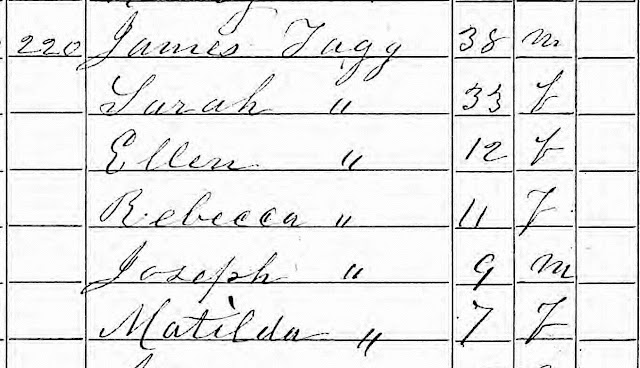
  • Compare the handwriting for deciphering hard to read names. L, S, and T and F 
1850 Lawrence County, Ohio census for James TAGG family. Does the "T" look like a T to you?
It could be interpreted as a "T" or "Y". Notice Martha Ward on the bottom line? She has no known relationship
 to anyone in the family. We may never know why she was living with them in 1850. 


Here is the James TAGG family in the 1860 Census. The "T" here looks more like an "F" to me.


And here is the family in the 1870 census. The letter "T" her has lost all resemblance to a T. It could be interpreted
 as an "L". I thought it looked like a capital ""B" that had lost its front | . Someone else has suggested it looked
 like a "Z" I have found this family listed under "T", "L", "F", and "S"  *

  • “Browse” the whole census for the area your ancestors lived. Maybe names were spelled wrong or indexed wrong. 
  • Check the last pages. If households were missed or weren’t copied in the right place, they were added here. 
  • Additional notes could be added on the last page. 
  • Remember: as with all genealogical research, start from the most recent to the oldest records. So your census search most likely starts with the 1940 census. 
  • Make a photocopy of the enumeration. If possible, include the headings listed at the top of each page. Download it to save it as digital file. Can be saved to your home computer or to the cloud. 
  • If possible, verify the information you discover in primary sources, like vital records. 
  • Find a neighbor from a known census and then search for that neighbor in the lost census 
  • Gender Confusion – Enumerator might put wrong gender if confused by name/nickname – Franka 
  • M1 – means one marriage 
  • M2- more than one; two or MORE 
Special Census Records
  • 1890 Union Veterans and Widows Census 
  • Agricultural Census these special censuses, taken in 1850, 1860, 1870 and 1880 lists what agricultural items were being produced in those given years. They list the number of cows, horses, pigs, and sheep as well as how much hay, corn and wheat were being grown. 
Headings from the 1850 Agricultural Census

1850 Agricultural Census for Gallia County, OHIO. My ancestor, Joshua JONSON/JOHNSON is a small
farmer compared to his neighbors, with only 40 acres.

  • Mortality Census lists deaths that occurred in the 12 months preceding the census. These were taken in 1850, 1860, 1870, 1880, and 1885. 
Excerpt from the 1880 Mortality Schedule for Gallia County, Ohio.
My ancestory, John Williams is the oldest person listed, dying at the age of 84 from pneumonia.

  • Slave Census Schedules during the 1850 and 1860 censuses, slaves were counted separately. Usually these do not list individual names, but only list the age, sex and color of the person, along with the owner’s name. 
Excerpt from the 1860 Census for Alexandria, Virginia. This entry is for "R.E. Lee" - Robert E. Lee. There are 41
enslaved African Americans listed. They are listed by age, gender and color. "B" indicates Black and "M" would
indicate mulatto.


Substitutes for Census
  • State Census - some states have produced their own separate censuses 
                  Usually taken for years in between the federal censuses. 
                  Type of information collected and availability of these censuses vary
                  widely. Consult State Census Records by Ann S. Lainhart,
                  for more information.

1855 Pike County Illinois Census. Like the earlier federal census, this one only lists the head of the household
and the ages and gender for everyone else. Griffin Hedges on the last line is the family I was looking for.

1856 Jefferson County, Iowa census. Here Griffin Hedges is listed with his wife and young children.


  • City and County Directories 
                  At local libraries
                  Available from Ancestry

Johnson listings from a 1948 Directory of Medina County, Ohio.

  • Tax Lists 
              Available from online websites like Ancestry
              Published tax lists
                      Index to Ohio Tax Lists 1800-1810
                      Early Ohio Tax Records
                      1812 Census of Ohio: A State-wide Index of Taxpayers 

  • Voter Registration Lists 
              California’s registers are available on Ancestry.
               MCDL Genealogy Blog - Voters' Records


1940 Los Angeles County, Voters Registration list.
Note that Ronald Reagan is listed as a Democrat!
The 1954 Los Angeles County, California Voter's Registration.
Ronald is still a Democrat at this point. Nancy, however has a "DS" designation.
"DS" indicates that she declined to say which party she belonged to.

So dig into those census records, but be sure wring every iota of information that you can from them!


*James' wife Sarah, seems to have dropped a few years between the 1860 and 1870 Census.We would expect her age to be listed as 43-44 years old from her age on the previous censuses. While it wasn't unusual to see that people did not list their ages consistently, to lose 15 years when you should have aged 10 is really bizarre. It wasn't until I ordered James' Civil War Pension records that I found the solution. His first wife, Sarah (Sally) McComas had died shortly after the Civil War. James relocated out to Illinois and remarried to Nancy Bee. She died a year later. Then James married for a third time to another, younger woman whose first name was also Sarah!

SOURCES:

Wednesday, September 20, 2017

S.S. Medina Victory

Medina's World War II War Bond Headquarters
Medina County contributed so much to the war effort during World War II. The newspapers of the time are filled with information on tire drives, paper drives, metal drives. The War Bond building where Medinians donated more that their fair share, still stands, having been moved to a lot to the west of the Medina Hospital.

The young men and women of Medina enlisted to fight the country's enemies, whether it was behind a cannon, a rifle, a medical mask or a typewriter.

Everyone had a Victory Garden and the library had a Victory drive in order for Medina's citizens to donate books to be sent overseas.

And Medina had a United States Victory Class Ship named after it.

WHAT?


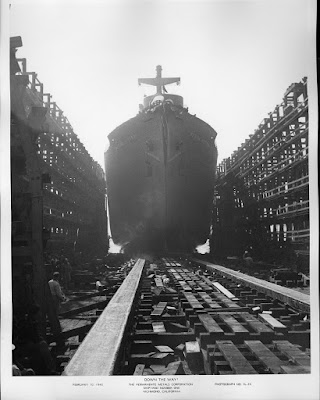
The S.S. Victory Medina was built toward the end of World War II and was launched on 10 February 1945.

What is a Victory Ship?

According to Wikipedia, Victory Ships were:

"The Victory ship was a class of cargo ship produced in large numbers by North American shipyards during World War II to replace losses caused by German submarines." They were larger and faster than the previously built Liberty ships.

A Victory Class Cargo ship


A cross section view showing the layout of the ship.


The first 33 of the Victory ships were named for members of the United Nations. The other 500 ships were named after U.S. towns and cities, and colleges and universities. Each state would only have two town names used. The towns had to represent the historic nature of the area. The S.S. Bucyrus Victory, the first Ohio ship to be named after an Ohio town, was launched in January 1945.

How did little ol' Medina get a ship named after it?

In early 1944, local businessman, Frank E. Judkins, was on a business trip out west and met up with Mr. John Carmody of the U.S. Maritime Commission. After chatting awhile and extolling the virtues of his hometown, Mr. Judkins asked how to get a ship named after "Medina". He was told to submit a petition. When he arrived back in Medina, he obtained the signatures of nearly 200 Medina Legion members, business men, and various civic club members. He submitted the request in April.

Weeks and months went by with no word. Judkins kept the pressure on with multiple letters inquiring the status of the request. Finally, in December of 1944, the Medina Chamber of Commerce received notification that a Victory Ship was being built at the Permante shipyards in Richmond California that would be named the "SS Medina Victory." It was to be launched on February 7, 1945. Frank was invited to the launch, but when it was delayed he was unable to attend.

Medina Gazette 22 Dec 1944, page 1
The Maritime Commission requested that the city send a woman the help launch the ship.

As the city would have to pay her expenses to travel to California, the Chamber decided to request that Mrs. Chaffee do the honors. Mrs. Chaffee's mother, Mrs. W.S. Thorpe, was still living in Medina. Mrs. Chaffee had accompanied her husband, Navy Lieutenant Almerin Chaffee when he was stationed to Oakland, California. So she was very near the Redmond shipyards.

Medina Gazette  26 December 1944, page 1.


On February 10, 1945, the S.S. Medina Victory was launched.


Mrs. Chaffee receiving a bouquet from flower girl,
Janet Eggleston
Scrapbook of Launch of S.S. Medina Victory


Mrs. Chaffee christening the S.S. Medina
Scrapbook of Launch of S.S. Medina Victory


The S.S. Medina going down the slipway
Scrapbook of Launch of S.S. Medina Victory


The S.S. Medina Victory is launched!
Scrapbook of Launch of S.S. Medina Victory


Her first voyage took her from San Pedro California, to Melbourne, Australia, to Calcutta, India, Ceylon, Mozambique, Durban and then to Philadelphia, PA. After this one voyage as a cargo ship, the War Shipping Administration decided to convert her to a troop transport ship.

Again from Wikipedia:

"Many Victory ships were converted to troopships to bring US soldiers home at the end of World War II. A total of 97 Victory ships were converted to carry up to 1,600 soldiers. To convert the ships the cargo hold were converted to bunk beds and hammocks stacked three high. Mess halls and exercise places were also added."

When this conversion was complete, the S.S. Medina Victory was loaned to the British. She sailed from New York in October 1945 for the Mediterranean where she ferried troops between  the Middle East and Toulon, France.


In 1948, the ship was purchased by the Donaldson Line and was turned into a passenger/freighter ship and was renamed the Laurentia. The ship was in operation until 1966 and was scrapped in '67.

S.S. Laurentia, previously named the S.S. Medina Victory

Do not confuse the S.S. Medina Victory with the S.S. Medina, a freighter built in 1914 and named for the river in Texas. That ship was once part of the U.S. Coast Guard, but spent most of her time as a cruise liner. At one time, she was a floating book shop and now is being converted into a luxury hotel.
S.S. Medina, built in 1914.


SOURCES:

The Atlantic Liners 1925-70 by Frederick Emmons
Donaldson Line Laurentia
National Park Service
Scrapbook of the launch of the S.S. Medina, donated to the Medina Library by Franz Zrilich, 1994.
Western Ocean Passenger Lines and Liners 1934-1969 by Commander C.R. Vernon Gibbs.
Wikipedia S.S. Bucyrus
Wikipedia Medina/Doulos Phos
Wikipedia Victory Ships
2 page letter detailing the application process, authenticated by F.E. Judkins.

Wednesday, September 13, 2017

Genealogy Lock-In


On Friday, September 22, the Medina Library will be offering its 18th Genealogy Lock-In.

The fun begins at 6:30 and lasts until 10:30 p.m.


The evening features two learning opportunities.

First, John Sabol will be exposing all the mistakes that beginner genealogists make. He'll explain how to avoid these common errors!

John's session will run from 7-8 p.m.

Next, I will be covering all the strengths and weaknesses of U.S. censuses. Learn how to make the most of these incredible records!

The Census session will run from 9-10 p.m.
Fill up on your favorite caffeine beverage!

Light refreshments will be available so we can all keep our energy levels up!

The Library computers and databases will be available for anyone who wishes to search for their relatives with help from Library staff and members of the Medina County Genealogical Society.

Space is limited, so sign up HERE. to reserve your spot.

Did I mention  DOOR PRIZES?


Wednesday, September 6, 2017

Who was Sidney Fenn?

All Medina City residents know that there is a school named after Sidney M. Fenn on West Union street.

If you have walked the halls of the school, you may have noticed his portrait and the plaque that recognizes his contributions to education in Medina.

Any articles or paragraphs on Sidney Fenn always include a long, long list of all of his accomplishments:

  • World War I Veteran
  • Charter member/commander of the American Legion Post.
  • Chairman/teacher of Americanization classes for the American Legion Post.
  • Chairman of the Medina Memorial Day Parade for many years.
  • 32nd Degree Mason
  • Kiwanis Club member
  • Chairman of the Service Union for the Salvation Army.
  • Active in the United Church of Christ Congregational and was a Sunday school teacher.
  • Lifetime member of the Medina YMCA
  • Public Relations Director for United Fund
  • First president of the Medina county Retired Teacher's Association.
But any person is so much more than their accomplishments.

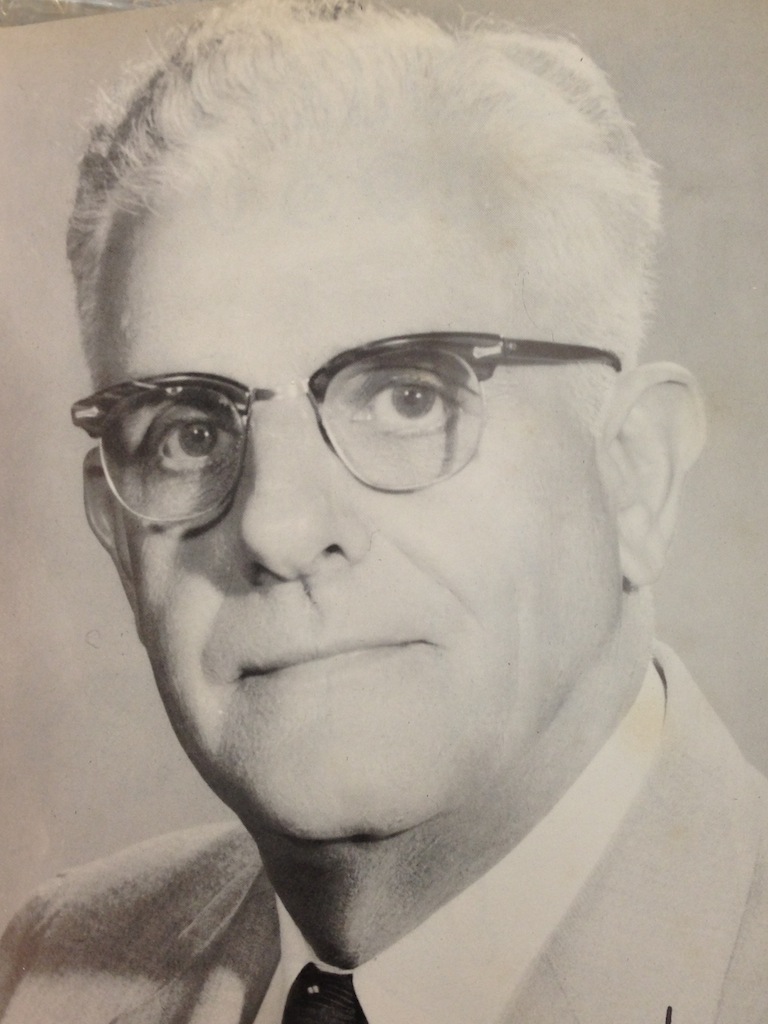
From the 1955 Medina High School Yearbook.
Courtesy of Rick Nowak.


Sidney Fenn was born in Medina County on 29 February 1892.  This is a portrait of him taken at a very young age. 

Yes. It was the custom to dress both boys and girls in long dresses and not cut their hair until they were old enough for the boys to graduate to pants.

In 1909, he attended the YMCA States Boys Conference.

After graduating from Medina High School in 1912, Sidney went to Ohio State University, graduating in 1916 with a degree in Agriculture. 

His first teaching job after graduation was at the Kingman Schools in Clinton County, Ohio.

21 February 1919, p. 7 Medina Sentinel


1918, Sidney joined the Army and served as a Corporal during World War I. This February 1919 Medina Sentinel article states that he had been assigned to Company L of the 329th and he had been training soldiers for the front of the war at the time of his discharge.


By 1920, Sidney is back living with his parents on North Court Street and he is listed as a salesman for a drug store.

In 1921, there is a Sidney M. Fenn listed in the Cleveland City Directory as a teller at the Garfield Savings Bank. While it is not certain that he is the same Sidney Fenn, no other Sidney Fenn appears in Ohio for the 1920 or 1930 censuses.

In 1922, he married Helen D. Miller in Wood County, Ohio. His occupation was "clothier" and hers was "musician".

In 1923 he was first hired as a teacher for the Medina Schools. By 1929, he had become a principal. He was principal of the High School for 18 years.

1927 Medina High School Yearbook
By 1937, Sidney is divorced from Helen, and he remarried. His second wife was Doris E. Camp.

In 1937, he earned his Master's Degree in Administration from Ohio State University. In 1947, the Superintendent's job became available suddenly and Sidney stepped into the void. He held that position until 1961, when he retired.

Sidney had three sons: Craig, Raymond and Robert. Tragically, Doris died in 1954. Sidney remarried to Mary Lou Strock, a music teacher at the high school.


1948 Medina High School Yearbook


Sidney's son, Robert Fenn, who also served as Superintendent of Medina Schools from 1980-1990, remembers this about his father (from The Story of Medina's Schools 1817-2017 by Gloria Brown):
      "I remember playing in front of the fireplace in his office. He sang a lot and he had a great sense of humor." After his mother died, Robert recalls, "He'd come home, put on an apron and make me supper. And he made oatmeal for my breakfast every morning."

About Sidney's dedication to the community and his leadership of the Salvation Army in Medina, Bob Fenn remembers, "People would come to the door, needing a place to stay or a meal. The man at the nearby filling station would send people to our house, telling them 'If you need help, go see Sid Fenn.' My father would always help them out."  


Bob Hyde, creator of the MedinaSquare.org web site also remembers "Sid" Fenn. Bob remembers the principal as being "straight forward, no-nonsense administrator and always, very fair. After a "talking to" Mr. Fenn would always say, "Don't do it again. Now go next door and see Mr. Claggett." Mr. Claggett doled out the punishment.


Local resident, Macy Hallock, was a student at the Medina High School, while Sidney was principal. He remembers Sidney fondly and with a smile in his voice recalls, "He was very likable, affable, with a good sense of humor. He was upright. Everyone liked him and he took an interest in everyone."  Macy also shared this incident:
     "One day I was called into the principal's office, and I had no idea why. Sidney set me down and said, "We have no more to teach you here. We want to send you to college early. The paperwork is all signed and ready for you to go."  Unknown to young Macy, Sidney Fenn and his father had discussed his future and didn't want him getting drafted into the war. So they had arranged for Macy to skip his final year of high school and go straight into college. And between them, they had decided that Sidney Fenn would be the one to tell him. Macy Hallock wasn't even 16 years old at the time.

So, who was Sidney Fenn? A pillar of the community? Yes. A good father? Yes. An all-around really nice guy? YES!

And an good sport?

Sidney Fenn commiserating with fellow birthday sharer about
only having a birthday every four years, because they were
born on 29 February. Medina County Gazette, 28 Feb 1956, p.1


I'd say so, wouldn't you?


SOURCES:
History of Medina County (1948)
Historical Highlights of Medina (1966)
The Story of Medina's Schools 1817-2017
Medina High School Yearbooks, 1927, 1948, 1955
Medina County Gazette
     21 Feb 1919, p. 7
     28 Feb 1956, p. 1

For Enquiring Minds:

Craig Fenn, Sidney's oldest son, did serve in the Army during World War II. In April of 1945, his parents received news that he was Missing In Action (MIA). Later that month, they learned that he had been taken a prisoner of war. And just a week after that, he was released from the POW camp and was reunited with his troops. 

Medina Gazette 1 May 1945, page 1.
Medina Gazette  8 May 1945

But better than that was the story he told when he got home...

Medina Gazette  22 May 1945, page 1