Wednesday, October 2, 2019

Cemeteries....where else would you find your dead relatives?

Guest Blogger, Lisa Rienerth, Library Associate, Medina Reference


Friendsville Cemetery - Westfield Twp.


Woodlawn Cemetery - Wadsworth
Using gravestones and cemetery records can be extremely helpful when doing your family research.  They can provide information on a relative who lived and died prior to the state or county recording vital records; it may lead you to other vital records; and it is always good to have one more source to provide the proof for your research. Plus it is one of the few physical connections you will have with a deceased ancestor.

There are a few hurdles you may need to overcome when doing this type of research. First, the gravestone only provides the birth and death date, but you have to remember, this information, though carved in stone, may be incorrect. Tombstone carvers make mistakes. Also, it may be hard to find the final resting place of your ancestor and even if you do find it, the stone may be unreadable due to age and other damage.

Don't let these reasons discourage you. The following instructions will help with these hurdles.

Let's start with an online search.


Two websites that I use are Findagrave.com  & Billiongraves.com. These sites depend on members to upload memorials and photos.  Finding your relative on one of these sites can be a tremendous help. Even if there isn't a photograph of the tombstone, the information given for the memorial is helpful and it provides a name of the cemetery where you may find even more records. There is usually a map of where the cemetery is located, which is helpful especially with the small and out-of-the-way cemeteries.


Look for other online sources. Sometimes the cemetery is large enough to have their own online database and sometimes the city, county or state may have one. Sometimes I just google the name of the city/county/state with the word "cemeteries" and see what comes up. I just found Ohiogravestones.org, a site for the State of Ohio, the other day.

Different online genealogy sites can also be helpful. The main two I use are FamilySearch.org & AncestryLibrary Edition (through your local library). These type of sites are adding more and more cemetery records to their databases and digitized images. They also will link to other sites like Findagrave and Billiongraves.

If you don't know where or when your ancestor died, you can use the U.S. Census to narrow down your search. This is another source you can find on online genealogy sites like the ones I mentioned above (this type of research was covered in the MCDL Genealogy Blog on 3 April 2019). If you find them in the census records and follow them through the decades, whenever you come to a year they are no longer listed, this may be a clue to where and when they died. For example, George Smith was found in the 1850, 1860 & 1870 U.S. Census in Montgomery County, Ohio. He is not located in the 1880 U.S. Census in Montgomery County, Ohio or anywhere else. This may be a clue that he died between 1870 & 1880 in Montgomery County, Ohio. This isn't a definite answer, but it does zero in your research to a smaller area.

Another online source is Archive.org. This site will help you find transcribed cemetery records and find where the cemeteries are located.


Findlay Republican Courier - Newspaperarchive.com
Obituary and death records can also be found online through genealogy sites and databases.

You can search for obituaries in many of the newspapers that Kathy Petras talked about in her 7 August 2019 Blog. Sometimes the place of burial is mentioned in the obituary.


The more recent 20th century death records are more apt to have the cemetery listed than the pre-1900 records.
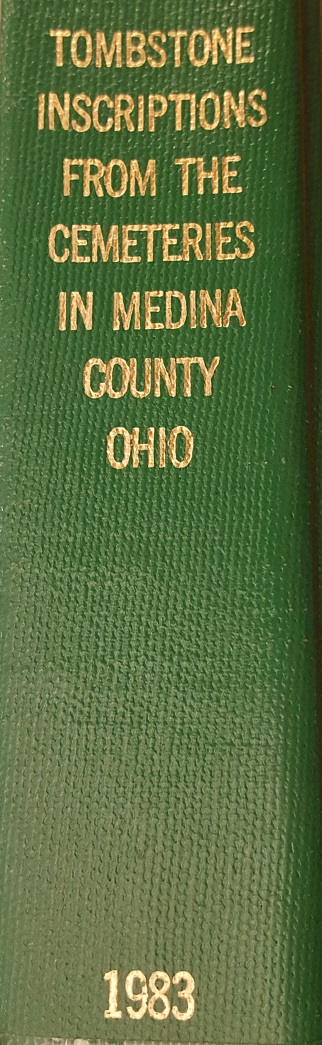


Cemetery records can also be found in libraries, archives, historical societies or government offices. You need to research the area where you believe your ancestor died and see which repositories are in the area and what types of records are kept there. For example, the Medina Library has a Tombstone Inscriptions book compiled by the Medina County Genealogical  Society. It is nice to have, because some of the transcribed tombstones are no longer readable.


The Western Reserve Historical Society is a local repository that owns not only local published cemetery records, but also out of state records. You can do an online search of their collection to see if they may have what you are looking for.


Trip Preparation


After using the above resources you should have a good idea of where you ancestor is buried. Now it is time to prepare for your visit to the cemetery. You may not be going to the ends of the world, but you need to take a few items to make the visit a successful one.


For more ideas on what to take, check out Your Guide to Cemetery Research by Sharon Debartolo Carmack.


O.k....you are packed and ready to go! Here are a few things to remember when you arrive...


Shaw Cemetery - Lafayette Twp.


  • Treat the area with respect and be careful of the markers.
  • Do not try to excavate or fix the marker.
  • When walking among the stones be careful where you step. The ground is not always level. 


Guilford Center Cemetery
Photograph more than just the tombstone....

Take one of the surrounding area to help you find the stone again if necessary.


Mound Hill Cemetery, Seville 
Take one of the tombstones around the one you found, these could be family members.


No headstone!?


You have walked the whole cemetery and you didn't find a tombstone...yet you know the person you are looking for is buried there....or you found the headstone, but you can't read it due to the fact that it is over 100 years old and the carvings have been worn smooth.

Do Not Fear! There are other places you can look! 

The Sexton, the person who looks over the cemetery and its records, may have the information you need. Even if you find a readable headstone, these records may give you even more information than what is on the tombstone. 

There is usually an office on the grounds of the cemetery. If there isn't one or you don't know if there is a sexton or not, go to the city or county offices. The Parks & Recreations office can usually tell you where those records are located or they may have them. If there isn't a Parks & Rec office, just check with the City Hall, they may at least be able to point you in the right direction.


Fostoria Fountain Cemetery, Ohio

The sexton or cemetery records may give you more than a name and dates. Sometimes it list other family members and sometimes cause of death.
Wilson Family Cemetery
Findagrave.com added by Medina County Graves, ID # 47506344

If the cemetery is affiliated with a church, contact the church to see if they keep the records. If it is a private family cemetery, you may need to get permission to search.


When you get home after your successful cemetery trip don't forget to download, identify & update as soon as possible! If you wait too long you will forget the details.


Searching for my ancestors in cemeteries is one of my favorite types of research. I hope you enjoy it and may all your searches be successful!


Sources:

All Medina County cemetery photographs, unless otherwise noted, were taken by me, Lisa Rienerth.

AncestryLibraryEdition, census records

Solether obituary, Findlay (Ohio) Republican Courier, 3 February 1966, page 24; digital images, Newspaperarchives.org.

FamilySearch.org, Ohio deaths, 1908-1953

Medina County Genealogical Society, Tombstone Inscriptions from the Cemeteries in Medina County, Ohio, 1983 (Evansville, IN: Whipporwill Publications, 1984).

Fostoria Fountain Cemetery, cemetery records, Fostoria, Hancock County, Ohio.


Bibiliography:

Findagrave.com

Ohiogravestones.org

Archive.org

Western Reserve Historical Society catalog (http://catalog.wrhs.org/collections/search)

Your Guide to Cemetery Research by Sharon Debartolo Carmack


Wednesday, September 25, 2019

Who are they?: The answers to last week's trivia challenge.

And the answers are:

1.William Batchelder - m. Ohio legislator for 40 years.
Read more about his career on this Wikipedia entry: https://en.wikipedia.org/wiki/William_G._Batchelder.
He and his wife, Judge Alice Batchelder, still own a house on East Smith Road in Medina.

William Batchelder
Photo is from a screenshot of a YouTube Video

2. Martin Van Buren Bates - k. A giant among men.
Captain Martin Van Buren Bates was literally a  giant, measuring 7 feet 5 inches tall. He and his wife Anna settled in Seville and became known as The Giants of Seville.

Captain Bates next to an 
ordinary man.
Photo courtesy of Wikipedia.

3. Sylvia Beach - h. Missing Wadsworth girl.
Sylvia was a young woman who went missing in the wild country around Wadsworth in 1823. Read more about her on this blog: https://mcdlgenealogyspot.blogspot.com/2016/08/missing.html 

4. Wilda Bell - q. 1st Black woman on Medina City Council.
Learn more about her inspiring life here:

Photo from Wilda's obituary at Waite & Son


5. Elsie Bennett-Wilson - p. Local library promoter.
Here is more information on this influential Medina woman: https://mcdlgenealogyspot.blogspot.com/2015/03/elsie-bennett-wilson.html

6. H.G. Blake - o. Started Old Phoenix Bank.
 Pick up any Medina history book and you will find entries on H.G. Blake. Starting the Old Phoenix Bank was just one of his accomplishments. Read more about his life: https://mcdlgenealogyspot.blogspot.com/2017/04/hg-blake.html

Old Phoenix Bank, undated, from Bob Hyde's Beyond the Storefronts web site.
The bank was one of the first buildings constructed after the 1870 fire that destroyed much
of uptown Medina. It rose from the ashes like a Phoenix. It was a Medina landmark
for well over 100 years until the bank was sold first to First Merit and later to Huntington Banks.

7. John W. Brown - a. Ohio Governor from Medina.
Sure, he was only Governor for 11 days, but he didn't let that slow him down! Here's more info: https://mcdlgenealogyspot.blogspot.com/2017/03/medinas-governor.html and on Wikipedia: https://en.wikipedia.org/wiki/John_William_Brown

8. Peter Cherry - c. Medina historian and author.
Almost forgotten now, Peter Cherry was once the go-to person for Medina and Summit county history. He wrote The Western Reserve and Early Ohio (1921) and The Portage Path (1921) and this article from The Medina Gazette:


Medina County Gazette 9 August 1935, section 2, page 3. Article by
P. (Peter) P. Cherry, 
a local Medina historian.
Cherry inflated the number of troops involved.

9. Sidney Fenn - t. Medina Educator and Principal.
The Fenn Elementary School is named in his honor. Learn more about him at: https://mcdlgenealogyspot.blogspot.com/2017/09/who-was-sidney-fenn.html

10. Rufus Ferris - r. Pioneer & land-sales agent.
Rufus was the land agent for Elijah Boardman, who owned most of Medina Township. He tragically died while trying to save others' lives during a cholera epidemic. Learn more here: https://mcdlgenealogyspot.blogspot.com/2017/06/rufus-ferris-medina-pioneer.html

Historic marker outside the house that Ferris built on what is now
North Broadway
11. Michael Foreman - l. NASA astronaut.
Who knew Medina County boasted their own NASA astronaut? Friends and family of Michael Foreman who grew up in Wadsworth.  Read about his career on Wikipedia here: https://en.wikipedia.org/wiki/Michael_Foreman_(astronaut)

12. William D. Frazier - w. Historic marathon walker.
Confession time - I forgot who William Frazier was, even though I wrote this blog about him:
https://mcdlgenealogyspot.blogspot.com/2016/06/william-bill-frazier-medina-legend-you.html

13. Sadie Green - e. An early Medina health nurse. Just not the first!
Often listed as Medina's first county health nurse, Sadie Green held that position from 1924 to 1935. Two other women were Medina Health nurses before her: Constance Hanna, 1920-1922, Miss Musse, 1922-1924. Read more about Sadie's life in this blog: https://mcdlgenealogyspot.blogspot.com/2015/03/sadie-green.html


14. Letha House - j. Medina benefactress.
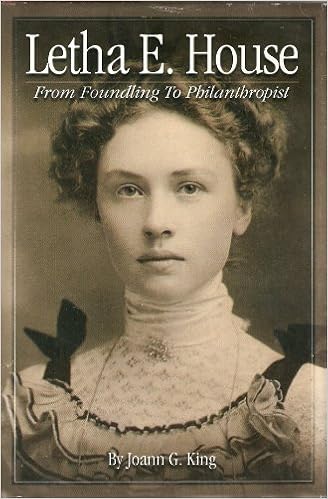
The Letha House Foundation has donated to numerous worthy causes in Medina County. If you want a short account of her rags to riches story, check out this blog: https://mcdlgenealogyspot.blogspot.com/2016/12/letha-e-house.html
For a thorough examination of her life, I can highly recommend this book by Joann King:
https://search.clevnet.org/client/en_US/me-main/search/results?qu=letha%20house&te=

Local author, Joann King wrote this imminently readable
account of Letha's life.

15. Sophia Huntington-Parker - x. founded the Pythian Sisters Home in Medina.
Demolished now, the home once stood at the end of Homestead on Huntington Street.


Read more about the lady who founded the home here: https://mcdlgenealogyspot.blogspot.com/2017/08/sophia-huntington-parker-pythian.html

16. Amos Mears - u. Businessman & cemetery sponsor.
When Mears left his entire estate to the Friends of the Cemetery, they decided to name their new Memorial Building after him.
Image result for spring grove cemetery mears medina
https://www.cleveland.com/medina/2016/05/friends_of_medinas_spring_grov.html
His life is covered here: https://mcdlgenealogyspot.blogspot.com/2015/06/amos-carlton-mears.html

17. Ray Mellert - y. Businessman & sports booster.
Ray Mellert was another Medina businessman and huge booster of local sports. He has a city park named for him on Huntington Street. Read about Ray in this blog: https://mcdlgenealogyspot.blogspot.com/2017/05/ray-mellert.html

18. Judge Albert Munson - A spiritualist.
The Munson family were spiritualists and held seances in their home. William McKinley, James Garfield and Abraham Lincoln are among the spirits they claimed to have talked with. Munson is one of the few well-known Medina characters that I haven't done a blog on, yet. Stay tuned for that!

19. Pete Rademacher - f. An Olympic gold medal boxer.
Rademacher was a champion boxer of the 1950's. Around Medina, he was just as well known for riding his one wheel motor cycle in parades. My coworker Lisa did a blog on Pete here:
https://mcdlgenealogyspot.blogspot.com/2016/02/pete-rademacher-1956-olympic-gold.html


20. A.I Root - i. Father of modern beekeeping.
Seriously? If you don't know A.I. Root is, you need to check out his candle store on West Liberty...
The man and his company were covered in this blog:
https://mcdlgenealogyspot.blogspot.com/2017/06/a-i-root-company.html

21. Chuck Schodowski - g. Beloved Cleveland TV personality.
Better known as "Big Chuck" of the "Big Chuck and Little John" TV Show. He was a Hinckley resident for many years. Tell the truth! How many of you looked for Dick Goddard's name in the list? Read more about his 43 years in Cleveland television here: https://search.clevnet.org/client/en_US/me-main/search/results?qu=big%20chuck%20my%20favorite&te=

Cover image for
Chuck wrote about his many years on TV.

22. Frederick Streeter - v. Only man hung in Medina.
Convicted and hung for murdering the Shubil Coy family, the evidence presented in court would not be enough to convict him today. Did he do it?
https://mcdlgenealogyspot.blogspot.com/2015/12/did-he-do-it.html

Frederick Streeter
Photo in the Medina Library's Collection

23. Franklin Sylvester - n. Paid for first Medina Library.
Franklin Sylvester was a Granger Township cattleman, who was childless. A friend urged him to follow the example of Andrew Carnegie and donate money to build a library in Medina. And he did.  His blog entry is here: https://mcdlgenealogyspot.blogspot.com/2016/10/franklin-sylvester.html

Franklin Sylvester as a younger man.
From the Medina Library Collection.

24. Edith Thomas - b. Chatham poet.
Edith was a renowned American poet who was born in Chatham. I admit that I would never have heard of her except for my friendship with Frank Munz, late Chatham historian. But she has her own Wikipedia entry: https://en.wikipedia.org/wiki/Edith_M._Thomas

25. Mel Wiley - s. Missing Hinckley Policeman.
He disappeared in 1985 from Edgewater Park where he went to meet friends for swimming. He left his car, his keys, his clothes and his wallet behind. And he hasn't been seen since. He was declared dead in 1993. Google his name to find the many theories about his disappearance.


How many did you get right??


SOURCES:

Wednesday, September 18, 2019

Who Are They?

Clockwise from upper left: Pete Rademacker, Elsie Bennett Wilson
Sidney Fenn, Franklin Sylvester, Letha House, Amos I. Root,
Sadie Green, in the middle, Wilda Bell.


Can you match these well known Medina people (below on the left)  with the occupation or activity they are known for?

Hint: Only some of them have been profiled on this blog.

  1. William Batchelder
  2. Martin VanBuren Bates
  3. Sylvia Beach
  4. Wilda Bell
  5. Elsie Bennett-Wilson
  6. H.G. Blake
  7. John W. Brown
  8. Peter Cherry
  9. Sidney Fenn
  10. Rufus Ferris
  11. Michael Foreman
  12. William D. Frazier
  13. Sadie Green
  14. Letha House
  15. Sophia Huntington-Parker
  16. Amos Mears
  17. Ray Mellert
  18. Judge Albert Munson
  19. Pete Rademacher
  20. A.I Root
  21. Chuck Schodowski
  22. Frederick Streeter
  23. Franklin Sylvester
  24. Edith Thomas
  25. Mel Wiley
    a. Ohio Governor from Medina
    b. Chatham poet
    c. Medina historian & author
    d. A spiritualist
    e. An early Medina health nurse
    f. An Olympic gold medal boxer
    g. Beloved Cleveland TV person
    h. Missing Wadsworth girl
    i. Father of modern beekeeping
    j. Medina benefactress
    k. A giant among men
    l. NASA astronaut
    m. Ohio legislator for 40 years
    n. Paid for first Medina Library
    o. Started Old Phoenix Bank
    p. Local library promoter
    q. 1st Black woman on Medina City Council
    r. Pioneer & land-sales agent
    s. Missing Hinckley Policeman
    t. Medina Educator & Principal
    u. Businessman & cemetery sponsor
    v. Only man hung in Medina
    w. Historic marathon walker
    x. Founded the Pythian Sisters Home
    y. Businessman & sports booster

Stay tuned for the answers!

Wednesday, September 11, 2019

Medina Steak House as Stagecoach Stop?

Medina Steak House, 538 West Liberty St.,  circa 2011 from
http://www.phdelicious.com/Restaurants/Medinasteak.htm
The old Medina Steak House, now the Serenite Restaurant and Culinary Institute, has a long oral tradition, often repeated, that it started its existence as a stagecoach stop. Also home to the Medina Recovery Center, in the past the building has been used as "a restaurant, an inn, a hotel, a brothel, a bookie joint, grocery store and as a stage coach stop."(Medina Post 2015 article)

Now I don't expect to find it listed as either a brothel or a bookie joint in published records. Since both those activities are illegal, the owners or operators would have taken action to keep their businesses clandestine and out of print. But surely a stagecoach stop would be documented, wouldn't it?

Maybe not.

Where is it written that the building was a stagecoach stop?
  1.  A  Medina Sun Sentinel article published on 29 October 1981 about Medina Haunts, says "The building itself is filled with history, built about 1858 as a stagecoach stop then used as a train stopover..."
  2.  A 14 March 2015,  Medina Post article written by Kevin McManus says, "The building itself was reportedly built by Harrison G. Blake as a stagecoach stop in 1858."
But I could not find any documentation earlier than those two articles.

First of all, some history:

In the U.S. stagecoaches and or boats (including canals) were the main method of public transportation until the railroads came in. In most areas of Ohio, railroads were the norm by the 1850's and in 1854, Medina leaders tried to bring a railroad in. A group of investors formed the Cleveland, Medina and Tuscarawas Railroad and purchased the right-of-way from Grafton to Seville. They graded the route and then tried to raise the money to lay down the tracks. They failed. It would be almost another 20 years before a railroad came to Medina.

Colton's railroad & township map of the state of Ohio from 1854
The red outlined black tracks represent railroad tracks - all outside of Medina County's borders.


Detail from the 1857 map of Medina County. The red star is approximately the location of the old
Medina Steak House. Nothing is located there on this map. It is just part of C. Hubbard's property.
The chopped curved line from top to bottom that is to the left of the star is the railroad bed for the failed
Cleveland, Medina, Tuscarawas Railroad.
Using Bob Hyde's "Beyond the Storefronts" web site and  newspaper articles, the building can be tracked back in time through its various incarnations.

1968 picture of the old Steak House from Bob Hyde's
"Beyond the Storefronts" web site.
Neither the microfilm or the NewspaperArchive digital images were as
clear as this photo of a clipping from Bob's collection.


Medina County Gazette ad for the Medina Steak House.
23 May 1968, page 3.
An earlier incarnation of the steak house, as Roepers.
Medina Gazette 2 Nov., 1945 page 4


An ad from 14 May 1925 Medina Sentinel.
The property was known as the Miller House or the
Miller House Hotel from 1900 to the 1930's.
Undated and uncited picture of the old Steak House from when it
was the Miller House Hotel from  Bob Hyde's
"Beyond the Storefronts" web site.
From 1884 to 1900, the building was named the Germania House Hotel, John Gluntz proprieter.

Prior to that it was called the Palmer House Hotel.

Under Bob's Palmer House Hotel listing for 1873-1874 he says, "Palmer House Hotel became a stagecoach inn and stop as indicated by teeth marks on posts by wood eating horses called cribbers".  The building did not have to be a stagecoach stop for cribbing horses to gnaw at its hitching rails.

In May of 1872, H. G. Blake sold property to J.W. Palmer. Dr. Palmer and his son built the hotel.

By 1875, the hotel had changed hands and W.L. Stoaks was the new
owner. Medina Gazette 12 Nov., 1875, page 2.
Perhaps Dr. Palmer and his son should have
stayed in the patent medicine business?
Medina Gazette 3 May 1872, page 4.

What is known for certain?
  • As late as 1857 (map above) there was NOT a stage coach stop there. 
  • The building is one half a mile west of uptown Medina. Why build a stage stop so far from the main business area at that time?
  • The building that exists now at 538 West Liberty was built around 1872 by Dr. J.W. Palmer.
  • The new railroad opened in November of 1871. There would be no need of a stage coach after that.            
  • Was there a stagecoach stop there 1858-1871? It is still possible...
From the land and deed records available at FamilySearch.org, we learn that H.G. Blake bought and sold numerous properties from the 1850's through the 1870's. This indicates that he viewed land as investment opportunities.

Remember who owned the land according to the 1857 map above? C. Hubbard. In 1851, H.G. Blake bought 7 acres on the west side of Medina from Charles Hubbard and his wife. This was before the attempted railroad project of 1854. More land speculation? But why is C. Hubbard still listed as the owner in 1857?  An error in the map, like the railway bed line that is marked as a railroad line? He held onto the land until the 1870's, after the railroad came in. The value of the land would have greatly increased .

The two 19th century histories of Medina County, Pioneer History of Medina County (1861) and The History of Medina County and Ohio (1881) do not mention any stagecoach stop run by H.G. Blake. The coach lines mentioned that came through Medina are the Chidester House Hotel on the south side of the square and the American House Hotel on the north end of the square are both mentioned as stops at different times.

Browsing through the early newspaper from the 1850's and 1860's many advertisement for all sorts of services are found. Some of them promoting H.G. Blake's interests:

Medina County Gazette 26 May 1859, page 2.

Medina County Gazette 19 May 1859,page 2.
Medina County Gazette, 17 May 1872, page 1.
So clearly, Blake believed in advertising to promote his businesses. Why not promote a stage stop?

The answer might lie in this 1877 article criticizing the Palmer Hotel for selling liquor:

This wording seems to indicate that only land exchanged hands.
There was no building included, and no stagecoach stop.
Medina County Gazette 23 Feb., 1877, page 5

While this does not meet the standard of proof that there was never a stagecoach stop at that location, the lack of proof that there ever was one, does cast doubt on it.

What do you think?


SOURCES:
  • Colton, G. Woolworth. Colton's railroad & township map of the state of Ohio, drawn by George W. Colton, engraved by J M. Atwood. New York, 1854. Map. Retrieved from the Library of Congress,
  • Geil, John F. Map of Medina Co., Ohio. Philada.: Matthews and Taintor Publishers, 1857. Map. Retrieved from the Library of Congress, .
  • Hyde, Robert, "Beyond the Storefronts" MedinaSquare.org, accessed online September 2019.
  • King, Joann, Medina County Coming of Age, 1810-1900, Angstrom Graphics, Cleveland, OH, 2016.
  • Medina County Gazette
    • "Blake, Booth, Tyler & Co., advertisement", 19 May 1959,page 2, Medina County Gazette microfilm at the Medina Library, accessed September 2019. 
    • "Dr. Palmer & Son, advertisement, 3 May 1872, page 4, Medina County Gazette microfilm at the Medina Library, accessed September 2019. 
    • "H. G. Blake, advertisement", 26 May 1859, page 2, Medina County Gazette microfilm at the Medina Library, accessed September 2019. 
    • "Old Miller House Hotel", 5 July 1968, page 7, NewspaperArchive, accessed online through Akron Library, September 2019.
    • 23 May 1968, page 3, NewspaperArchive, accessed online through Akron Library, September 2019.
    • "Local Items", 23 February 1877, page 5, NewspaperArchive, accessed online through Akron Library, September 2019.
    • "Palmer House, advertisement", 12 Nov., 1875, page 2,  NewspaperArchive, accessed online through Akron Library, September 2019.
    • "Phoenix Bank, advertisement", 17 May 1872, page 1, Medina County Gazette microfilm at the Medina Library, accessed September 2019. 
    • "Roepers Steak House, advertisement", 2 Nov., 1945, page 4, NewspaperArchive, accessed online through Akron Library, September 2019.
  • Medina County Sentinel
    • "The Miller House, advertisement" 11 June 1925, page 5, NewspaperArchive, accessed online through Akron Library, September 2019.
  • Medina Post
  • "Medina Steakhouse" on PHDelicious.com circa 18 March 2011, accessed online September 2019. 
  • Mershon, Peggy, "Stagecoaches Were A Familiar Sight", Mansfield News Journalhttps://www.mansfieldnewsjournal.com/story/news/history/2016/07/22/history-stagecoaches-were-familiar-sight/87432230/  , accessed online September 2019.
  • Perrin, William Henry, History of Medina County and Ohio. Containing a History of the State of Ohio, From its Earliest Settlement to the Present Time, Baskin & Battey, Chicago, IL, 1881. Accessed on Internet Archive September 2019. https://archive.org/details/historyofmedinac00perr/page/n6 
  • "Record of deeds, 1818-1871; index to deeds, 1790-1923", Medina County Recorders Office, accessed online at FamilySearch.org September 2019.
  • Shapiro, Eleanor, ed., Historical Highlights of Medina, Meyers Lithographers, Medina, OH, 1966.
  • "Stagecoach Routes In Northern Ohio", Encyclopedia of Cleveland History, Case Western University, https://case.edu/ech/articles/s/stagecoach-routes-northern-ohio , accessed online September 2019.


Thursday, September 5, 2019

FAQ about Ancestry.com


Guest Blogger: Lauren Kuntzman, MCDL Family History & Learning Center Manager

 versus


At Medina County District Library (MCDL) we offer access to Ancestry Library Edition (ALE). ALE can be used for free, by anyone visiting any of our library branches, to research their family history. You can read all about ALE in this blog post. We often get questions about how the subscription resource Ancestry.com, compares to Ancestry Library Edition (ALE). For this month’s instructional blog post, I’ll try to answer a few of our most frequently-asked questions:
  1. How does Ancestry Library Edition differ from Ancestry.com?
  2. How do I search for and view records in Ancestry.com?
  3. What are some of the features of family trees in Ancestry.com?
  4. What are the subscription options for Ancestry.com?
  5. Do I need to subscribe to Ancestry.com to research my family history?

1. How does Ancestry Library Edition differ from Ancestry.com?
Ancestry Library Edition (ALE) differs from Ancestry.com in four specific ways: the quantity of records included, the interactive/personalized features, DNA, and resources for learning. Here are more details on these topics: Records
If you look in the “Card Catalog” for Ancestry Library Edition (ALE), you’ll find that it has 10,387 record collections. The “Card Catalog” in Ancestry.com, on the other hand, reports that it has 32,684 record collections. According to ProQuest (the information content company that distributes ALE) when compared to Ancestry.com, ALE does not have...
  • As many newspapers (and newspaper-related content, like obituaries)
  • As many family and local history books
  • As many passenger lists and immigration records
  • Freedman’s Bank Records
  • The “One World Tree” collection (note: this collection has been discontinued)
  • The “Biography & Genealogy Master Index” (a master index to Who’s Who in America? and similar publications)
Interactive/Personalized Features ALE doesn’t have three interactive features that are available to Ancestry.com subscribers. These include: -- Message Boards - In ALE, “Message Boards” can be read, but not added to. With an Ancestry.com subscription you can answer members’ questions, as well as post your own questions to the boards. This feature is less active than it once was, as Facebook and other social media platforms see more use today. -- Family Trees Hints - ALE offers no means of building a family tree online; this feature is reserved for individuals with an Ancestry.com account. Users begin to build their tree by entering information about themselves, then details about their parents, their grandparents, and so on.
There are five hints for my 2xg-grandfather... I'll need
review those carefully, to make sure the hints are accurate.
Once these details are entered, Ancestry.com’s servers begin automatically searching records to produce green leaf “hints.” Just remember -- these are only hints. Look at every document and evaluate them carefully! Another detail to remember -- Ancestry.com’s hint servers only search about 10% of their records… so the other 90% of the records need to be searched manually! -- Community - Since ALE isn’t an account tied to an individual, it doesn’t offer ways for users to collaborate with other users. This feature is available to Ancestry.com subscribers. Under the “Help” menu, users can select the “Community” menu item. Among other features, this enables a subscriber to connect with researchers and search the Ancestry.com user profiles. DNA Testing
A third category in which Ancestry Library Edition (ALE) differs from Ancestry.com is in DNA. ALE has no connection to or option for DNA testing. (Note: While ALE doesn’t have an option for DNA testing, there are alternatives available including 23andMe, FamilyTreeDNA, and MyHeritage.) If you buy a DNA test from Ancestry.com, when you register your test, you’ll be prompted to create a free account. With a free account, you’ll be able to view your DNA test results, including your “Ethnicity Estimate” and your “DNA Matches.” With this free Ancestry.com account, you can also do the following:
  • start building a family tree and get hints
  • use Ancestry.com’s “ThruLines” ™ to get suggestions about which ancestors you and your DNA matches share (this feature requires having tree linked to your DNA results and is like a hint system for DNA results -- evaluate this information carefully, too!)
  • view Ancestry.com’s “Card Catalog”
  • access, search, and view a few record collections that are free (like the 1880 and 1940 censuses)
  • access record collections that are made free for a brief period of time (example: Irish records were free to use during March)
The free account has limits though. With the exceptions of the free record collections mentioned above, you will not be able to view records in the database. Resources for LearningALE and Ancestry.com differ in how they teach users about family history research and using the database. In ALE the “Learning Center” and “Charts and Forms” are displayed prominently in the top menu. These resources include tips for research, maps, and blank copies of family group sheets, research logs, census records, and more. Ancestry.com, on the other hand, offers “Ancestry Academy” which includes webinars on various topics. The blank copies of charts and forms are available on Ancestry.com, too, but they aren’t as prominently displayed -- or as easy to find. 2. How do I search for and view records in Ancestry.com? Searching for records in Ancestry.com is exactly the same as searching for records in Ancestry Library Edition. My colleague Lisa has already written a great guide to this, which you can read here: https://mcdlgenealogyspot.blogspot.com/2016/04/ancestry-library-edition.html. Lisa’s blog post also contains excellent information about the interface for viewing records. The only real difference between ALE and Ancestry.com, is that Ancestry.com requires a paid subscription to view almost all content. Viewing records on Ancestry Library Edition is free when accessed at MCDL. 3. What are some of the features of family trees in Ancestry.com? Building a family tree on Ancestry.com is fairly intuitive. Once you begin entering information on yourself and your family, within moments you’ll likely see “hints” appearing to direct you to records. Remember to search for more records directly through the search interface! Every individual in your tree will have a profile page with four tabs, including “LifeStory,” “Facts,” “Gallery,” and “Hints.” Since we’ve already addressed the hint system earlier in this blog post, here’s an overview of the other three tabs:

The “Facts” tab is the most important one (in my opinion). It is illustrated in the image above. In this tab you can view any records you’ve found and attached to the individual (whether generated by a hint, or one that you found through searching). These records are saved as “Sources.” You can also add non-Ancestry sources here manually, as well as hyperlinks to any page on the Internet. Information from the Ancestry.com records will begin to generate a timeline of "Facts" about your ancestor’s life, as well as a list of family members, including parents, spouse(s), and children.
In the “Gallery” tab you can upload your own photographs, newspaper clippings, and other documents that aren’t available in Ancestry.com. As you may have noticed above, I added a photo of my 2xg-grandfather, Edward. This content then can easily be shared with “cousins” on Ancestry.com. The “LifeStory” tab is an automatically-generated biography of your ancestor. It includes facts about their life (created from records you find on Ancestry.com and life events you add to the “Facts” tab) as well as maps and historical facts for context. As your tree grows, you’ll want to keep in mind your options for privacy. Information on living individuals is always hidden from anyone but a tree owner/creator, but you have three options for additional privacy, including making your tree...
  • public (allows all Ancestry.com users to view your data on deceased individuals)
  • private and searchable (so Ancestry.com users can see that your tree exists, but have to ask permission to view it)
  • private and not searchable (your tree is totally hidden)
You can invite other Ancestry.com users to view your tree with various privileges (guest access, viewing living people, and/or editing rights). Non-Ancestry.com users can be invited to the tree, too, but they will have to create a free account; this free account works similarly to the ones created by AncestryDNA test participants. It’s important to remember, that if you stop subscribing to Ancestry.com you won’t be able to access the tree you created there. Some software (like Family Tree Maker 2017 and RootsMagic) will enable you to sync and backup your tree onto your computer. At the very least, you’ll want to download and save a copy of your tree as a GEDCOM -- a computer file type specific to family trees. You can do so by clicking into your “tree settings” and selecting “export tree.”
And don’t forget, there are other options for creating online family trees. One alternative is FamilySearch, which allows users to collaboratively build online trees, with links to records and added photographs, for free. (Note: In a couple of months, our instructional blog post will focus on FamilySearch, so be sure to stop back and read more then!) 4. What are the subscription options for Ancestry.com? As I’ve discussed above, there are a few situations in which you can have a free Ancestry.com account. These free accounts provide limited access to records and information on the website. Another option is the free 14-day trial, during which time you’ll have access to all of Ancestry.com’s records. At the end of the trial period, you’ll have to decide to cancel your account or subscribe at one of their three levels. Ancestry.com subscription levels differ in terms of record access:
  • “U.S. Discovery” gets you all of the U.S. records on Ancestry.com
  • “World Explorer” gets you all U.S. records, plus Ancestry.com’s international records
  • “All Access” includes all of Ancestry.com’s U.S. and international records, as well as access to two other databases: Newspapers.com Basic and Fold3.com
5. Do I need to subscribe to Ancestry.com to research my family history? It depends on what your research goals are... If you’re researching Ohio ancestors and need Ohio records then an Ancestry.com subscription may not be necessary. The records you can access through ALE (and FamilySearch) may be sufficient to help you solve your research problems. If you’re interested in DNA-testing -- and want to find biological relatives in the United States -- then it is important to consider that Ancestry.com has the largest DNA data pool and gives you the best chance of finding the most matches. When you think about whether or not you want to subscribe to Ancestry.com, consider if it is the right tool for the job you’re trying to complete. Hopefully, the information above will help you determine if Ancestry.com is right for you -- or if an alternative like Ancestry Library Edition, FamilySearch, MyHeritage, FamilyTreeDNA or 23andMe is better-suited for your research needs. And, as always, if you have more questions about Ancestry.com or researching your family history, please feel free to email the MCDL Genealogy Team at me-team.genealogy@mcdl.info.