Showing posts with label OGS. Show all posts

Wednesday, November 4, 2015

What I learned....


The Ohio Genealogical Society Library near Bellville, Ohio
just a few miles off I-71.
Every year in October the Ohio Genealogical Society offers an all-day seminar for genealogy librarians. We get to network with other like minded library staff, tour the library facilities and most important of all, discover new genealogical techniques and resources. On October 16th Lisa and I attended the 13th Annual Genealogy Librarians Seminar. We had a very good time and learned a lot!

Here are some highlights:

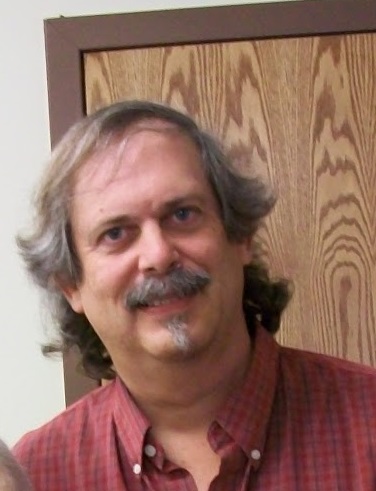
Tom Neel, the OGS librarian, talked about Naturalization Records. Lisa and I have worked with
Tom Neel, Librarian at the
Ohio Genealogical Society Library
naturalization records before, but Tom's talk took us in deeper than our own research had ever required of us.  Facts:
  • Naturalization was not required, unless the immigrant wanted to vote or buy land. I suspect buying land was more of an incentive than voting.
  • Prior to 1920, most applicants were men. Their wives and children's citizenship status followed whatever he was. If a native born American woman married an "alien" immigrant, she became an alien resident. In 1920, women won the right to vote, so they had to change that law.
  • Colonial citizenship only required an "oath of allegiance" to whoever was in power, mostly like the King.
  • In 1776, all white male residents of became citizens of the new-born United States of America, if they wanted to. But for many years, only white males who owned land could vote.
  • Residency requirements changed over time:
    • Prior to 1795 you had to be a resident for 5 years.
    • Starting in 1795, you had to be a resident for 3 years.
    • In 1824, the law was changed so you had to be a resident for 2 years.
  • Different paperwork was filed:
    • First paper- declaration of intent. Many immigrants were encouraged to file these as soon as possible.
    • Second papers - Petition for naturalization - were filed in court.
    • Certificate of citizenship was issued to the immigrant and would remain in the immigrant's possession.
  • Naturalization papers could be filed in any court of law. In Ohio:
    • Prior to 1852 could be filed in the county court of common pleas or the Ohio Supreme Court.
    • In 1852, the probate courts were formed and they took over most of the applications for naturalization. These papers would be on file with the Clerk of Courts.
    • The "packets" of naturalization papers are on file at the National Archives Regional Offices. For Ohio, that is in Chicago, Illinois.

Gwen Mayer giving a Haunted
Hudson Tour. Gwen's eyes make
her look possessed.


Next, Gwen Mayer from the Hudson Library and Historical Society talked about genealogy programming at her library. She works with their genealogical society and between them they offer TWO genealogy programs a month! She had a lot of GREAT ideas that we hope to implement in the coming months. I don't want to ruin the surprise, so I won't give any details here. And alas! Our staffing levels will  not permit us to offer two programs a month...


Then, Lisa Long of the Ohio History Connection talked about Ohio's State Hospitals and 
Athens State Hospital, closed in 1993.
Known to thousands of Ohio University students as 
"The Ridges."
Developmental Centers. These are the hospitals for people with mental illnesses, epilepsy or developmental disabilities. Most of us have at least one or more ancestors who needed to be hospitalized in one of these institutions. She covered the history of the legislation that created the hospitals and that also still protects the records. Many of the hospital records have been turned over to the Ohio History Connection, but can only be released to the deceased patient's closest living relative for a $25 fee. Case files, the detailed daily record of treatment and progress, are destroyed 10 years after the patient's release from care. Some documentation of patients' lives can be found in public records, such as:
  • Death records
  • Census records showing the "inmates" living at the hospital at the time of the census.
  • County home registers.
  • The DDD census schedule taken in 1880, that lists the deaf, dumb and disabled.
  • Newspaper reports
  • Institutional cemeteries. Toledo & Athens have online listings: toledostatehospitalcemetery.org and namiathensohio.org/~oldsite/GravesDirectory.html 
  • County Histories
  • Ohio Laws
  • Probate records - it is up to each probate judge whether to provide access to these records. I have luckily found several for my ancestors.
The last presentation was named "Its Electric: Publicizing Your Archival Collections Using EAD FACTORy" by Amy Dawson of Cleveland Public Library. I will admit it. Amy was talking way over my head at the beginning, using jargon and acronyms that I didn't understand. But once we got some definitions, I enjoyed her talk. Basically, she was talking about how to use the open source software, EAD FACTORy to produce finding aids for your digital or archival collections.

An Edris Eckhardt Alice in Wonderland
figurine created by WPA artists, like what
the Medina Library owns.


For example, the Medina Library owns a set of Edris Eckhardt ceramic statues. But unless you talked to me, you would never know it. But with this software we could create a finding aid that would be added to the library's catalog of materials. Then anyone who searched for Edris Eckhardt in the catalog would find out that the Medina Library owns some of her work and that it is in storage. I hope that we are able to use these tools for our collection in the near future.


While you may not be a candidate for the Annual OGS Librarian's Seminar, you should be checking out what classes and programs your local genealogical society or local library is offering to enhance your genealogical research skills!


And I want to thank everyone who lets me know that the blog is appreciated and valuable. Most of you contact me via email, FB or personally. It is nice to know that you are out there! THANKS!

Wednesday, July 22, 2015

Lineage Society Update


I got in! My application to The Society of Civil War Families of Ohio was accepted!


Next April, in Mason, Ohio, I will attend the Ohio Genealogical Society (OGS) Conference and The Society of Civil War Families of Ohio banquet and receive my certificate and my pin!

You might remember that I was a little nervous about this application, as OGS is known for its stringent lineage society application process.


I covered the application process in two earlier blog posts:
Now, my dilemma is... Do I apply for First Families of Ohio?

First Families of Ohio pin.
Isn't it pretty!?!


The application would be nearly identical. I would just have to prove one generation past my Civil War ancestor and prove that his father was in Ohio before 1820. This gets a little trickier, because of the lack of birth and death certificates in this time period. I will have to rely on wills/estate records and land records to prove First Families eligibility. But I am so close!!


If you still don't understand why anyone would want to apply to a lineage society, or have questions about how to go about it, the Medina County Genealogical Society has a very nice article about it in their latest newsletter:

THINKING ABOUT A LINEAGE SOCIETY ??
Do any of these statements reflect your genealogy research:
 My parents and/or grandparents and/or ancestors lived in Ohio before 1914.
 My great grandfather or great uncle served in the Civil War and lived in Ohio.  I learned that my family once lived in
Medina County.
 Whenever I tell my family about these ancestors that I have found, they politely smile, nod their heads and change the subject.
For once it would be nice to have someone tell me “Congratulations” with regards to my research and place on “A+” on the papers I would show them!!”
If you have answered “Yes” to any of these statements, you should consider submitting your research to a lineage society. When your papers are accepted, your work is acknowledged as meeting genealogy standards. Your ancestors are remembered
forever in the collection of the lineage society. Fellow genealogists are acknowledging your accomplishments and publish this in their publications.
Still, you may hesitate to take the time to follow through on this effort. For most people, they are intimidated by the application process. The purpose of this article is to advise our membership that lineage support will be available before and after all future chapter meetings. Board members have lineage experience with Ohio Genealogical Society, our own chapter lineage society, as well as Daughters of the American Revolution (DAR) and Sons of the American Revolution (SAR.) The members will be happy to answer your questions, review paperwork suggest areas of research and/or share our previous applications. We hope to show you that the process to honor your ancestors in a lineage society is very rewarding and not as difficult as you think.